Blog
Hot Take

Disrupting Traditional Models to Foster Product Innovation

  • Product innovation is crucial for Series A and B2B SaaS founders in today's market.
  • Agile and lean methodologies enable iterative design and reduce financial risk in product development.
  • Innovation sandboxes allow teams to test ideas without impacting core business operations.
  • Fostering a culture of innovation requires leadership support and an emphasis on accountability.

Product innovation is no longer optional in the hyper-competitive landscape that modern businesses navigate. For Series A and B2B SaaS founders and CEOs, the need to constantly innovate is imperative. Traditional models of product development, management, and innovation often fall short in addressing the unique challenges and accelerated timelines of the current digital age. A strategic shift is essential—an overhaul that not just fosters innovation but embeds it into the company's DNA.

The concept of disruption in product innovation revolves around leveraging novel approaches, iterating rapidly, and staying agile. This article aims to provide in-depth, actionable guidance on disrupting traditional models to foster continuous product innovation.

Transforming the Traditional Thought Paradigm

Traditional management approaches often emphasize meticulous planning, long-term forecasting, and a resistance to failure. However, the prevailing winds of change demand a reconsideration of these guidelines:

  1. Agile Development and Lean Startup Methodology:
    Agile development and lean startup methodology emphasize iterative development, early customer feedback, and rapid prototyping. Eric Ries's Lean Startup approach revolutionized product development by promoting the Build-Measure-Learn feedback loop, allowing startups to validate hypotheses with minimal financial risk. This methodology is equally beneficial for established companies aiming to recreate their success in newer markets.

  2. Cross-Functional Teams:
    Innovation requires a synthesis of different perspectives and areas of expertise. Cross-functional teams, consisting of members from various departments (e.g., engineering, marketing, and customer service), can significantly enhance innovation. These teams should be empowered to experiment without continuously seeking approval from higher-ups, thereby fostering a faster and more dynamic iterative process.

  3. Sandbox for Innovation:
    Provide a safe space for teams to experiment—the innovation sandbox. This environment allows teams to conduct experiments affecting only specific segments or components, mitigating risks to the core business while fostering creative freedom.

Knowing Your Customer Better than They Know Themselves

Often, the unspoken needs of customers hold the key to groundbreaking products and services. The methodologies grounded in "Jobs-To-Be-Done" (JTBD) theory advocate an in-depth understanding of the tasks customers aim to accomplish. This understanding drives feature prioritization and product development towards better fulfilling customer needs.

Transforming Product Discovery with Continuous Insights

Product discovery is critical and ongoing. Modern product managers should shift from annual budgeting processes to continual discovery frameworks where customer feedback is incorporated on a rolling basis.

  1. Real-Time User Feedback:
    Utilize customer data, analytics, and direct feedback channels to gather real-time insights. This can help prioritize features and improvements that deliver immediate value to the user base.

  2. User Research and Interviews:
    Regularly conduct user interviews to uncover unmet needs or pain points. Techniques like personal identification and creating detailed user journeys can help improve understanding and alignment of product features.

"Innovation distinguishes between a leader and a follower." - Steve Jobs
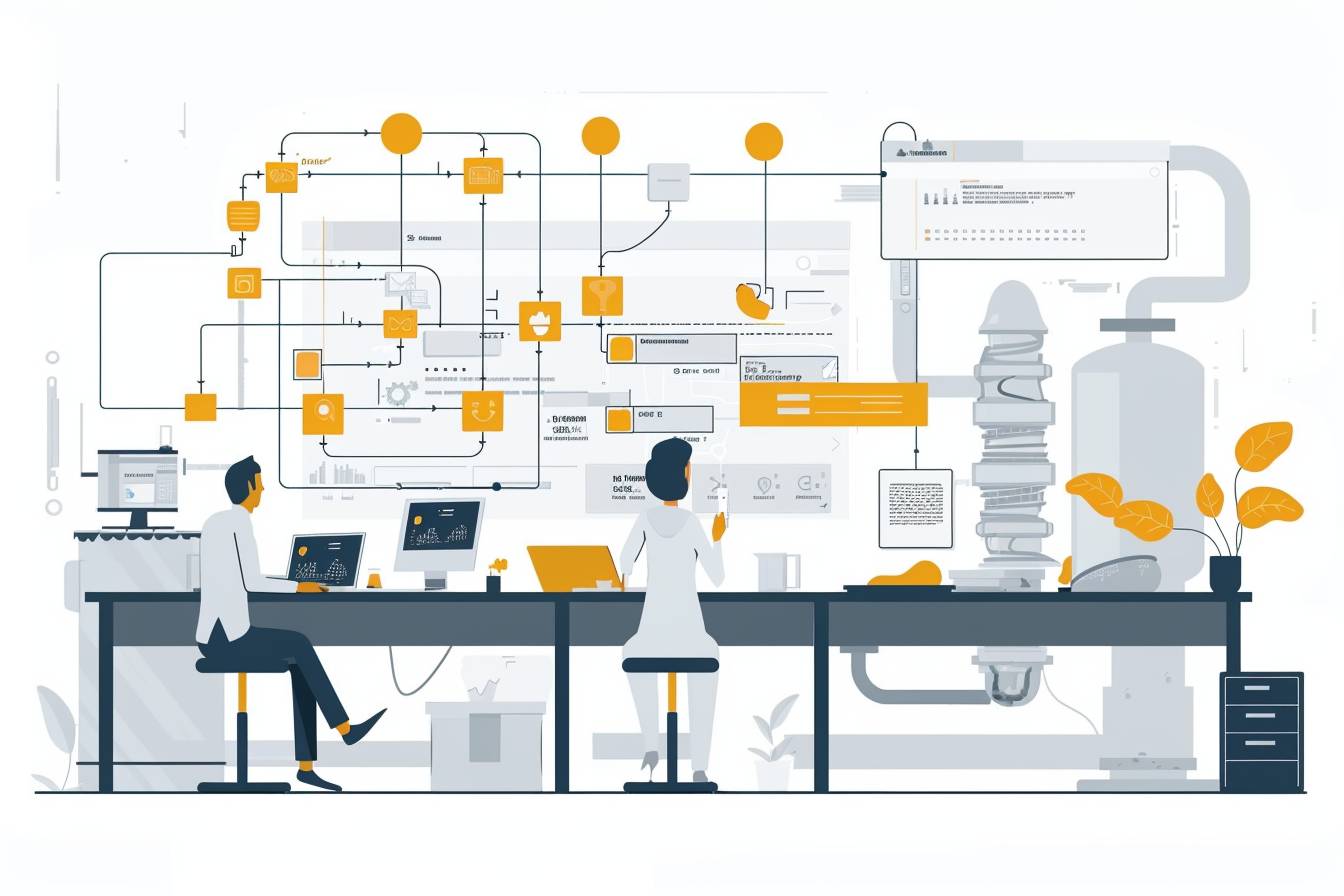
An illustration depicting two individuals working at a lab bench, analyzing data on computers, surrounded by flowcharts and process diagrams.

Implementing Iterative Development

Reduce the "time to learn" through smaller, iterative cycles rather than large, infrequent product updates. Each iteration should be viewed as an experiment designed to validate or invalidate assumptions. Here's a structured approach:

Fostering a Culture of Innovation

Creating a culture that nurtures innovation involves more than mere structural changes. It requires a psychological and emotional commitment from every team member. Key strategies include:

  1. Encouraging Experimentation:
    Leadership must encourage experimentation and be tolerant of calculated failures. This shift from "playing it safe" to innovation-friendly approach can instill confidence in teams to take bold steps.

  2. Innovation Accountability:
    Instill accountability in innovation efforts by linking performance metrics with innovation goals. This means not just rewarding successes but also recognizing valuable learning derived from failures.

  3. Leadership Buy-In:
    Senior management should actively support and participate in innovative processes, showcasing their commitment. Management support is crucial in maintaining momentum and morale, even when facing setbacks.

Leveraging Business Model Innovation

One of the often-overlooked aspects of product innovation is the innovation in business models. Approaches like the Freemium model have transformed industries by redefining revenue streams and customer engagement strategies.

Case Studies: Real-World Applications

Intuit's Transformation with Lean Startup Practices

Intuit, a long-established company, embraced the Lean Startup methodology to radically transform its product development processes. By fostering a culture of rapid experimentation and empowering teams to operate with greater autonomy within innovative sandboxes, Intuit accelerated its innovation cycles and achieved notable gains.

"Success is the ability to go from failure to failure without losing your enthusiasm." - Winston Churchill
Three individuals analyze a digital dashboard displaying data visuals, interconnected lines, and colorful information panels in a tech-focused environment.

Grockit's Iterative Learning Approach

Grockit, an ed-tech startup, leveraged agile development and user feedback to iteratively improve its product. Despite initial struggles, they focused on micro-learning cycles wherein user stories guided development, ensuring the product resonated well with users by prioritizing features based on feedback and measurable data.

Conclusion: Crafting the Future

Disrupting traditional models to foster product innovation isn't merely about adopting new tools or frameworks; it's about nurturing an adaptive mindset that sees value in experimentation, rapid learning, and agility. By adopting practices such as lean methodologies, iterative development, and a culture conducive to innovation, Series A and B2B SaaS founders and CEOs can lead their companies toward sustainable growth and market leadership.

Disruption is not a one-time event but a continuous effort. Success lies in embedding this dynamism into the company's core, making it resilient to changes and ever-prepared to seize new opportunities. Let every step forward, every slight pivot, and every calculated risk taken be a testament to a relentless pursuit of innovation.

In this new era, a dedicated focus towards disrupting traditional models is not just a choice but a requisite. Only those who innovate incessantly, introspect continually, and adapt swiftly will stand the test of time and lead in their respective markets.

By harnessing these strategies, your organization can not only foster innovation but ensure it becomes the lifeblood of your business, driving sustained, long-term success.

The citations for the provided insights can be found in references to the materials provided, confirming the importance of innovative environments and agile methodologies in driving product success.